I Help Businesses Scale with Data Driven Marketing Strategies
Welcome to my world
Hi, I’m Jone Lee a Developer.Professional Coder.UI/UX Designer.
I use animation as a third dimension by which to simplify experiences and kuiding thro each and every interaction. I’m not adding motion just to spruce things up, but doing it in ways that.
Maecenas finibus nec sem ut imperdiet. Ut tincidunt est ac dolor aliquam
sodales. Phasellus sed mauris hendrerit, laoreet sem in, lobortis mauris
hendrerit ante. Ut tincidunt est ac dolor aliquam sodales phasellus smauris test
Rainbow-Themes
Cara Delevingne
Chief Operating Officer
Travel Mobile App Design.
via Upwork - Mar 4, 2015 - Aug 30, 2021 test
Maecenas finibus nec sem ut imperdiet. Ut tincidunt est ac dolor aliquam
sodales. Phasellus sed mauris hendrerit, laoreet sem in, lobortis mauris
hendrerit ante. Ut tincidunt est ac dolor aliquam sodales phasellus smauris test
Bound - Trolola
Jone Duone Joe
Operating Officer
Web App Development
Upwork - Mar 4, 2016 - Aug 30, 2021
Maecenas finibus nec sem ut imperdiet. Ut tincidunt est ac dolor aliquam
sodales. Phasellus sed mauris hendrerit, laoreet sem in, lobortis mauris
hendrerit ante. Ut tincidunt est ac dolor aliquam sodales phasellus smauris
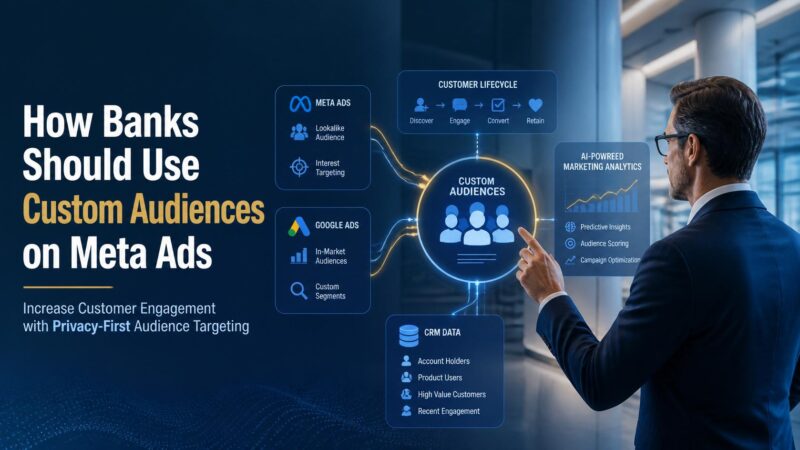
How Banks Should Use Meta Custom Audiences to Power Smarter Facebook Ads
Retail banking is one of the highest-CPA, highest-consideration verticals on Meta. Meta Custom Audiences for banks are the single biggest lever to stop paying for reach that will never convert and start paying for proven intent. This guide covers the exact audience architecture, use cases, compliance requirements, and rollout steps a bank needs to run smarter, lower-CPA Facebook and Instagram campaigns.
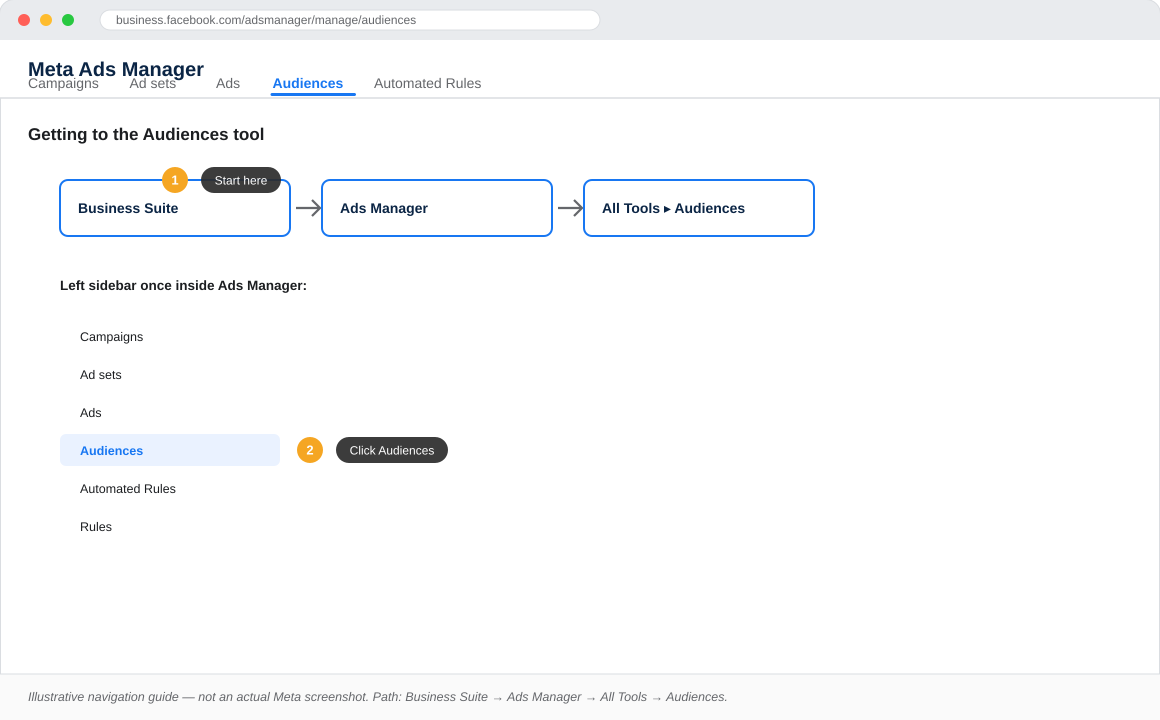
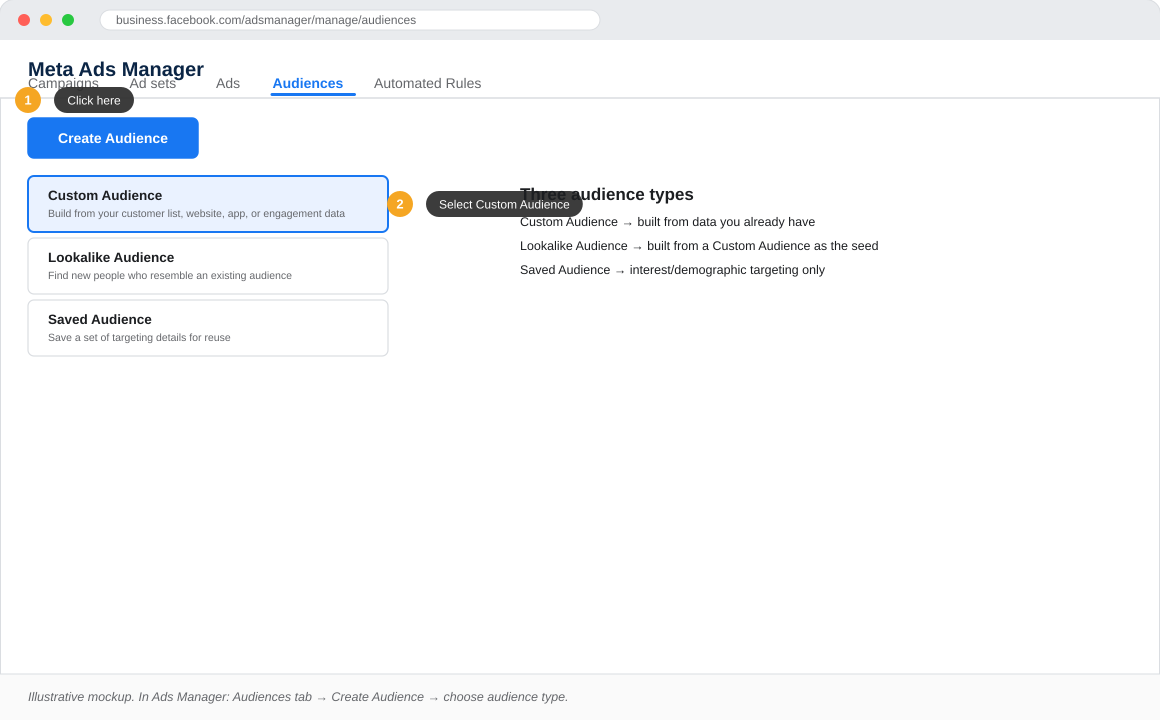
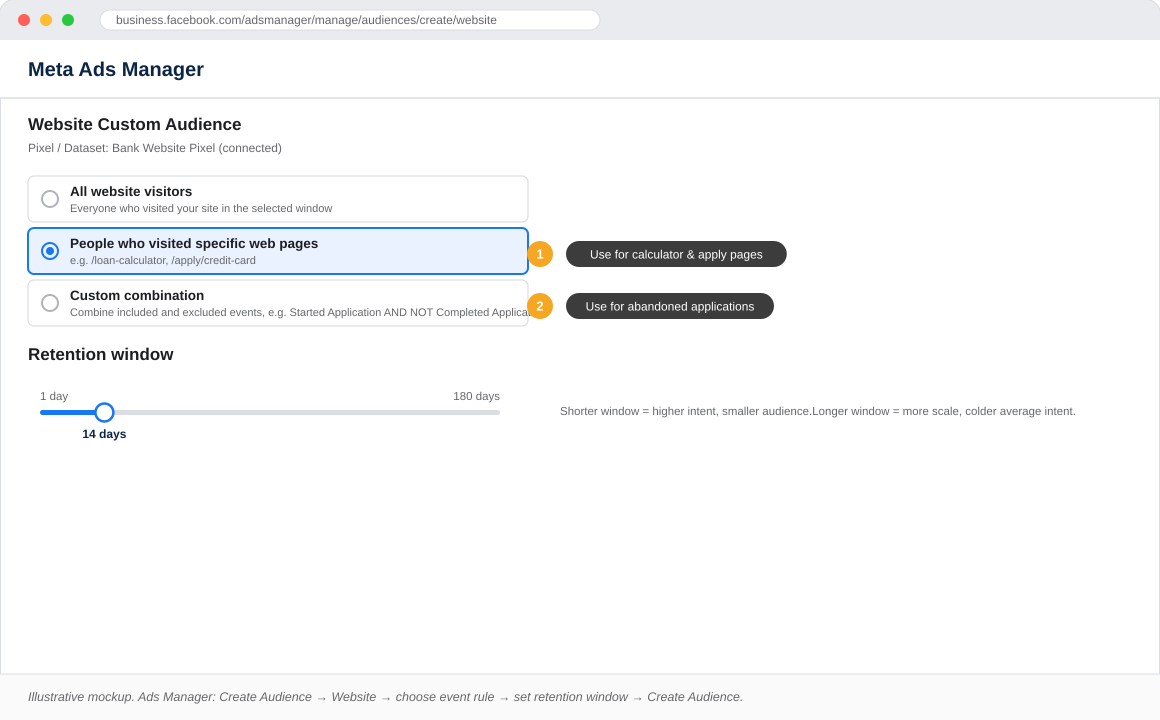
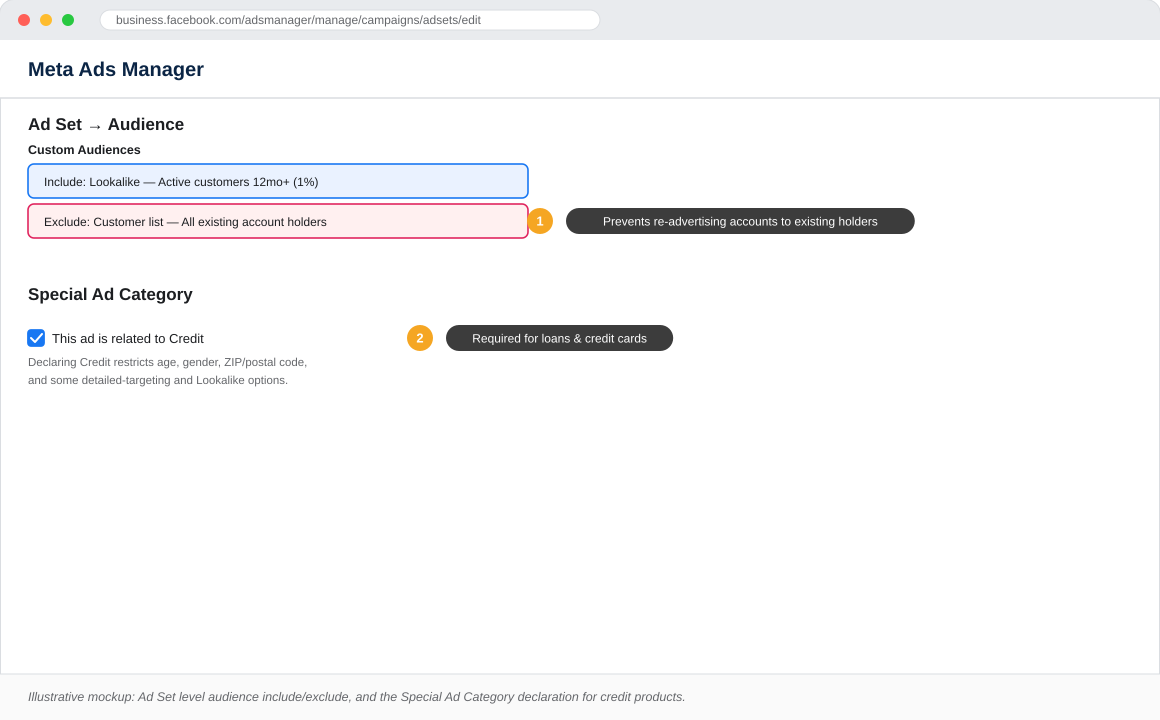
The screens in this article are illustrative navigation mockups built to match Meta Ads Manager’s current layout and terminology, not live screenshots. Meta’s interface changes frequently — always confirm exact labels against your own Ads Manager account.
Key Takeaways
Generic demographic targeting in banking drives high CPAs because intent signals are ignored entirely.
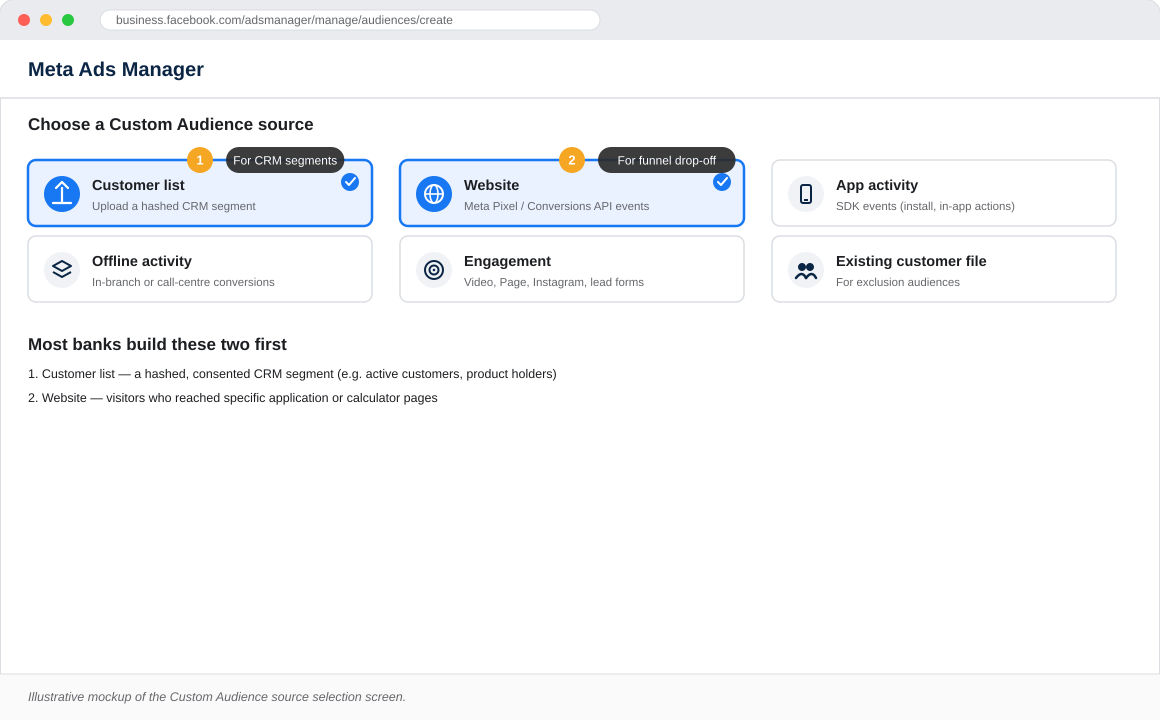
Meta supports three Custom Audience source types: customer lists, website and app activity, and engagement audiences.
Abandoned application retargeting is the highest-ROI use case available to any retail bank on the platform.
Special Ad Category rules restrict credit and loan campaigns significantly and must be declared at campaign creation.
The Conversions API is now the minimum viable tracking standard post-iOS 14.5, not an optional upgrade.
Audience refresh cadences and consent-based suppression lists are regulatory requirements, not best-practice suggestions.
Why Generic Targeting Fails Banks
Most retail banks still run Facebook and Instagram campaigns on broad interest and demographic targeting: age brackets, “finance” interests, lookalikes of a Page’s fans. On a low-consideration product this is inefficient. On a bank account, home loan, or credit card, it is expensive in a way that shows up directly in cost per approved application.
A prospect who has never visited the loan calculator, never opened the banking app, and has no relationship with the brand is fundamentally a colder lead than someone who started an application and dropped off at the KYC step. Meta’s Custom Audiences let a bank build campaigns around that difference in intent, rather than guessing at it through demographics.
The practical consequence of broad targeting in banking is a bloated top-of-funnel that costs significantly more per approved customer than a properly segmented Custom Audience strategy. Banks that have shifted from broad demographic targeting to intent-based Custom Audience architecture consistently report lower CPAs and higher application completion rates. The mechanism is straightforward: you are showing credit and account-opening offers to people who have already demonstrated some signal of interest, rather than to anyone who fits a broad age and location bracket.
The Three Custom Audience Building Blocks
Before mapping audiences to use cases, it helps to understand the three source types Meta supports. Every campaign strategy in this guide is a combination or exclusion built from these three building blocks. Getting the foundations right determines how much flexibility you have when constructing more advanced audience segments later.
Customer List Audiences
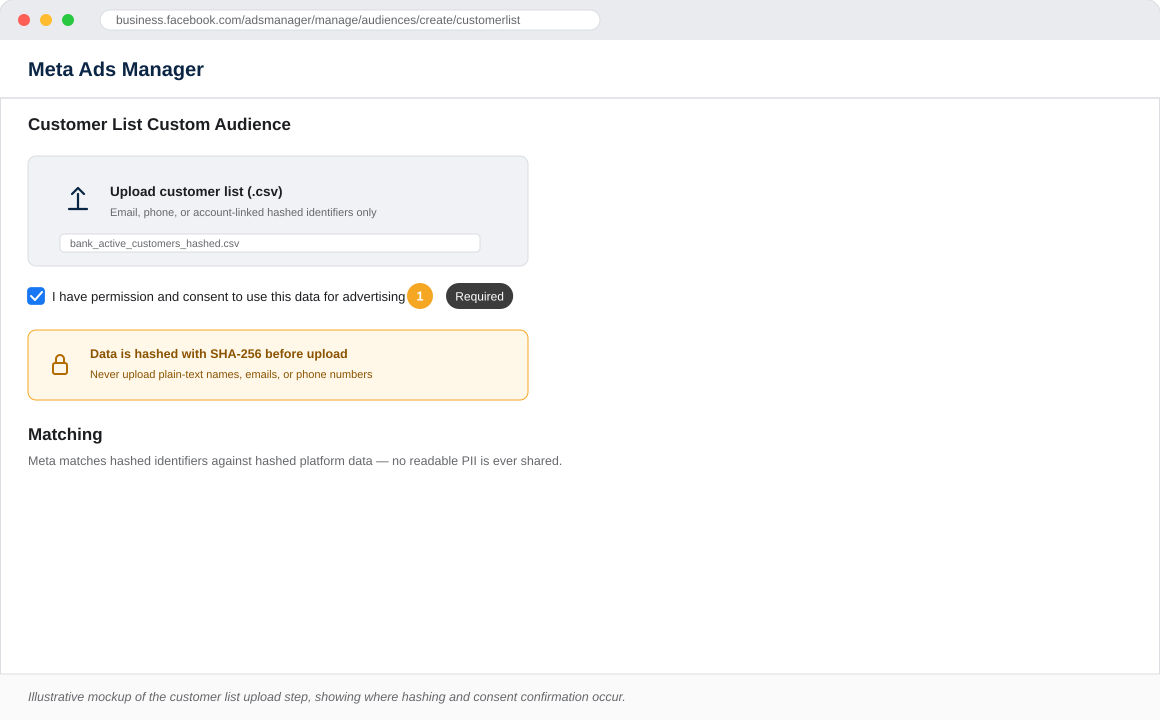
A bank uploads hashed PII (email, phone, account number) directly into Meta Ads Manager. Meta matches records against its own user graph and never exposes raw data on-platform. The quality of the seed list determines the match rate, and match rate directly determines the usable audience size. A list of 10,000 records with clean, recently verified email addresses will typically outperform a list of 50,000 records with outdated or inconsistent data. Banks should treat their CRM data quality as a media performance asset, not just an operational concern.
Website and App Activity Audiences
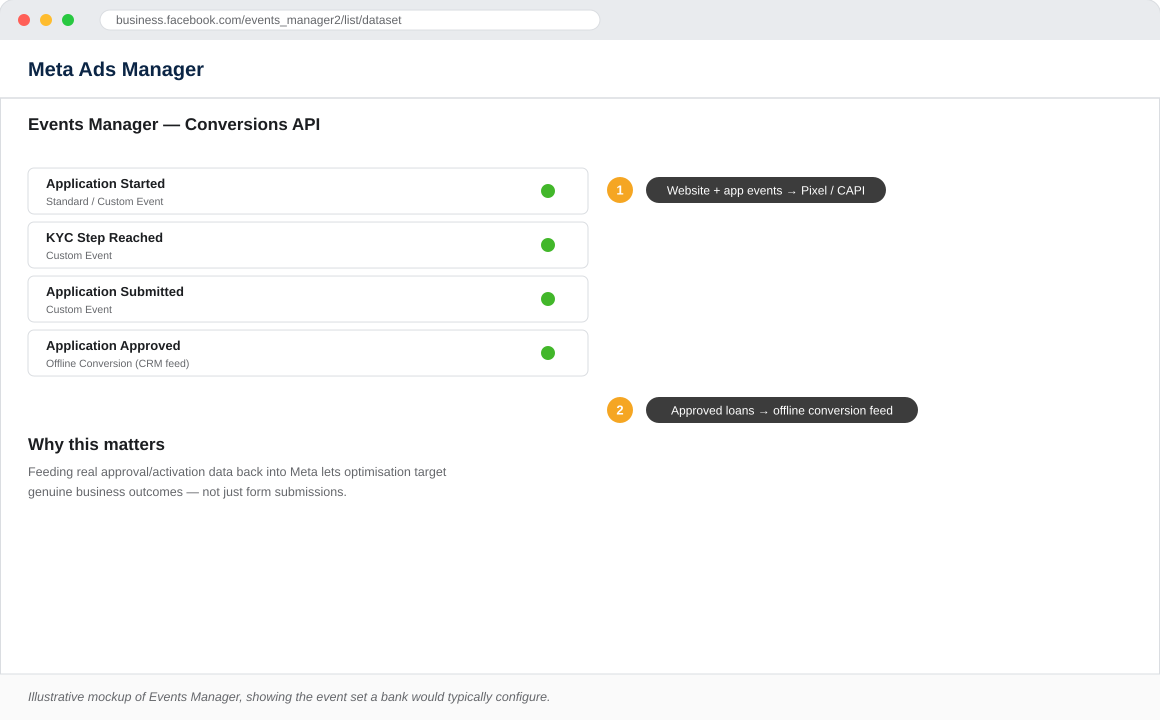
Built from the Meta Pixel and, more reliably post-iOS 14.5, the Conversions API. These audiences target visitors to specific pages (loan calculator, card comparison, account opening flow) or specific events (application started, KYC step reached, application submitted). The specificity of event tagging is what separates a mediocre retargeting strategy from a precise one. A bank that tags only general page views gets a broad retargeting pool. A bank that tags individual steps in the application funnel can build separate audiences for each drop-off point and serve messaging that addresses the specific friction at that step.
Engagement Audiences
People who watched a video past a defined threshold, opened a lead form, engaged with the bank’s Page or Instagram profile, or triggered in-app events via the Meta SDK. Engagement audiences are particularly useful for banks running awareness campaigns: a prospect who watched 50 percent of a product explainer video has demonstrated more intent than someone who merely scrolled past a static banner. Segmenting retargeting by engagement depth allows for sequenced creative strategies that move prospects progressively closer to an application.
High-Impact Use Cases for a Bank’s Media Plan
The following use cases represent the highest-ROI applications of Custom Audiences in retail banking. Each one targets a specific intent signal, reducing wasted spend on audiences that have no relationship with the product. Prioritise them in order: the first two alone can generate significant CPA reductions before any of the more advanced audience strategies are built.
Abandoned Application Retargeting
Anyone who reached the account opening or loan application flow but did not submit is the highest-intent pool available on the platform. These prospects have already made the decision to explore the product; something in the process stopped them. Retarget within seven days with objection-handling creative and a simplified CTA. The messaging should acknowledge the friction directly: application takes three minutes, funds within 24 hours, no commitment required to check eligibility. Keep the ad unit simple and the landing page frictionless. This single audience segment, properly activated, typically delivers the lowest CPA of any campaign a bank runs on Meta.
KYC Drop-Off Recovery
Prospects who completed the first form steps but abandoned at the identity verification stage represent a distinct and valuable segment. They cleared the initial intent barrier and provided personal information before stopping. The friction at KYC is almost always anxiety-driven: concern about document security, uncertainty about the process, or impatience with the time required. Reassurance-led messaging performs best here. Lead with security credentials (encryption standards, regulatory oversight), process simplicity (which documents are needed and why), and time-to-approval to overcome the anxiety that caused the original drop-off.
Pre-Approved CRM Offers
Upload a hashed segment of customers the bank has already pre-approved for a credit product. The cost per conversion for this audience is dramatically lower than any acquisition campaign because the credit decisioning is already done. The ad is not selling the product; it is delivering a notification the customer is eligible for something they can access immediately. Subject line thinking applies here: the creative should feel like personalised communication, not a generic product ad.
Lookalike from High-Value Customers
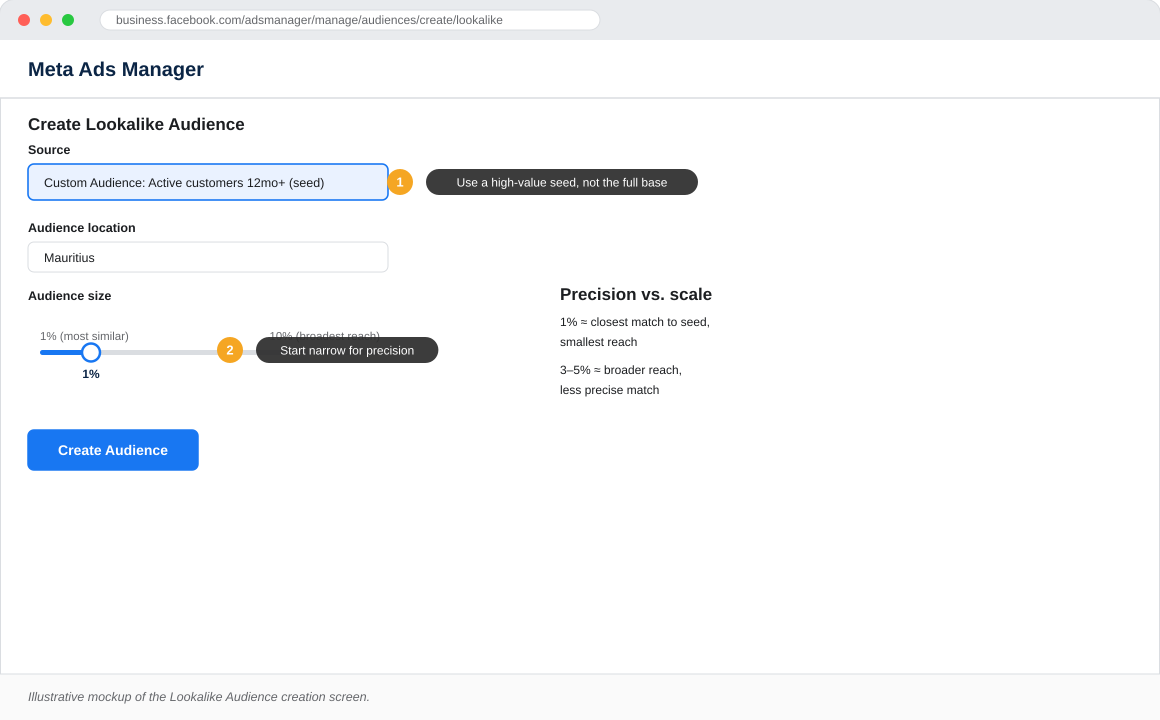
Build a 1-3% lookalike from your most active, highest-LTV customer segment, not the full customer base. The seed list quality is everything: a seed built from customers who have held a current account for three or more years, hold two or more products, and are digitally active will produce a fundamentally different lookalike than one built from all registered customers regardless of activity. Use this audience for top-of-funnel awareness rather than direct conversion. Its role is to fill the top of the funnel with people who are statistically similar to your best customers, not to close a sale on first contact.
Cross-Sell to Existing Customers
Upload a CRM segment of current account holders who do not yet hold a credit card or personal loan. Serve product-specific creative with an existing-customer offer, distinct from the acquisition creative running to cold audiences. The compliance considerations here differ slightly: you are marketing to existing customers under a pre-existing relationship, but the specific data used and the product being marketed still determine whether Special Ad Category rules apply. Always confirm with your compliance team before running credit product campaigns to existing customers via a third-party platform.
Mapping Audiences to the Funnel
Every Custom Audience should be assigned a funnel stage and a KPI before it goes live. Without this structure, teams end up judging a cold prospecting audience by conversion rate, or a bottom-funnel retargeting audience by reach, and drawing the wrong conclusions from both. The framework below maps each audience type to the stage where it belongs and the metric that should determine whether it is working.
Audience-to-Funnel Framework
01
TOFU
Awareness
Reach new prospects who mirror your highest-value customers but have no prior relationship with your brand.
Audience Source
Lookalike 1-3% from high-value customer list
Objective
Awareness & Reach
Primary KPI
CPM, Reach, Video Views
02
MOFU
Consideration
Re-engage prospects who have visited product pages, watched your videos, or interacted with your brand content.
Drive product adoption and lifetime value from your existing customer base through targeted cross-sell campaigns.
Audience Source
Existing customers via CRM upload (cross-sell segments only)
Objective
Engagement
Primary KPI
Product Adoption Rate
Each stage requires its own campaign, creative strategy, and success metric. Never mix funnel stages within the same ad set.
Compliance: The Part Banks Cannot Skip
Financial services sit in a more constrained position on Meta than most advertisers. Getting compliance wrong carries both regulatory and platform risk: accounts can be restricted, campaigns rejected, and in regulated markets, fines can follow. The constraints below are not best-practice recommendations; they are requirements. Treat them as go-live gates, not post-launch considerations.
Data Hashing and PII Handling
Never upload plain-text PII to Meta Ads Manager. Use Meta’s on-platform hashing when uploading customer lists directly, or preferably send events server-side via the Conversions API with SHA-256 hashing applied before transmission. The Conversions API approach is both more secure and more reliable: it bypasses browser-side blocking, delivers better event match quality, and gives the bank a documented server-to-server data transfer record for compliance purposes. For any bank operating under GDPR, POPIA, or equivalent frameworks, documented data handling procedures for third-party platform uploads are typically a regulatory requirement.
Consent and Suppression
Only use customer data for Meta marketing where the customer has explicitly consented under the bank’s privacy policy and the applicable data protection framework. This is not a Meta platform rule; it is a legal obligation in most markets where banks operate. Maintain a suppression list for opt-outs and sync it on every audience refresh cycle. A customer who opts out of marketing this month and receives a retargeted loan ad next month is both a compliance failure and a trust event. The suppression list should be treated as a live asset, not a batch-update file.
Special Ad Category for Credit Products
Meta requires credit, employment, and housing-related ads to be flagged under the Special Ad Category at campaign creation. This restricts targeting by age, gender, ZIP or postal code, and limits some lookalike configurations. Loan, credit card, mortgage, and overdraft campaigns typically fall under this category. The restriction must be declared at the campaign level before any ad sets are built. Attempting to correct it after launch requires recreating the campaign from scratch. Declaring incorrectly or omitting it entirely risks campaign rejection and, in repeat cases, account restriction.
Audience Refresh Cadence
Set a defined refresh and expiry cycle for all uploaded customer lists and website audiences, typically 30 to 90 days depending on the product and consent framework. Running campaigns against stale audience data is both a compliance risk and a performance problem: withdrawn-consent customers may still be receiving ads, and converted customers may still be in acquisition retargeting pools. Automate the suppression list sync wherever possible. Manual processes at the audience refresh stage are where consent violations most commonly occur.
Conversions API as the Tracking Baseline
Browser-only Pixel tracking significantly under-reports conversions in a post-iOS 14.5 environment due to tracking restrictions and browser privacy changes. Server-side event matching via the Conversions API is now the minimum viable tracking standard, not an optional upgrade. For a bank, the quality of event data directly determines how well Meta’s algorithm optimises toward approved applications rather than mere landing page clicks. A campaign optimising toward clicks with a Pixel-only setup and a campaign optimising toward approved applications with CAPI event data are fundamentally different products in terms of who gets shown the ads and what the resulting CPA looks like.
A Practical Rollout Checklist
Use this as a go-live gate for any bank launching or auditing its Custom Audience strategy on Meta. Every item on this list represents a gap that, if left open, will either drive CPA up, put the account at compliance risk, or both.
Install the Meta Pixel and Conversions API on all digital account opening, loan application, and card application flows
Define and tag key events: application started, KYC step reached, application submitted, application approved
Build an exclusion audience of existing customers for every acquisition campaign
Build a CRM-based lookalike seed from your highest-value, most active customer segment, not the full customer base
Set up an abandoned-application retargeting campaign with benefit-led, objection-handling creative within a 7-day window
Confirm Special Ad Category is correctly declared on every credit, loan, and mortgage campaign before any ad sets are created
Set a 30 to 90 day audience refresh cadence and connect it to your consent and suppression list
Feed offline conversion data (approved loans, activated accounts) back into Meta so optimisation targets real business outcomes, not landing page submissions
Document all data transfer procedures and consent records for regulatory audit readiness
Frequently Asked Questions
Can banks legally use customer data for Meta Custom Audiences?
Yes, provided the bank has obtained explicit marketing consent from customers under its privacy policy and the applicable data protection framework (GDPR, POPIA, or equivalent). The data must be hashed before upload, a suppression list for opt-outs must be maintained and synced on each audience refresh, and the legal basis for using customer data for third-party platform targeting must be documented. Banks should confirm the specific consent language in their existing customer agreements with their legal or compliance team before activating CRM-based audiences on Meta.
What is the minimum list size for a Meta Custom Audience to work?
Meta requires a minimum of 100 matched users for a Custom Audience to be usable in targeting. In practice, audiences below 1,000 matched users are too small to exit the learning phase reliably and typically result in high CPMs and unstable delivery. For lookalike audiences, Meta recommends a seed list of between 1,000 and 50,000 people, with quality prioritised over quantity. A seed of 2,000 high-value customers will outperform a seed of 20,000 mixed-quality records in almost every case.
Does the Special Ad Category restriction significantly limit campaign performance?
Yes, but the restriction is manageable with the right audience architecture. Special Ad Category prevents targeting by age range below 18, gender, ZIP or postal code, and limits some lookalike radius options. Banks that rely on Custom Audiences rather than demographic targeting are less affected by these restrictions because their audience segments are built on intent and behaviour rather than demographics. The impact is felt most on cold prospecting campaigns where lookalike configuration is limited. This is why Custom Audiences, particularly abandoned application retargeting and CRM-based segments, become proportionally more valuable under Special Ad Category constraints.
How often should a bank refresh its Meta Custom Audiences?
Website and app activity audiences refresh automatically based on the lookback window set at creation (typically 7, 14, 30, or 90 days). Customer list audiences require manual re-upload or API-based automation. Most banks run a 30-day refresh cycle as a baseline, with more frequent updates for high-velocity segments such as abandoned application retargeting. The suppression list should be updated at minimum on the same schedule and ideally in near-real-time for any customer-facing bank with active opt-out mechanisms in its digital channels.
What is the difference between the Meta Pixel and the Conversions API for banks?
The Meta Pixel is a JavaScript tag that fires in the user’s browser and sends event data to Meta. The Conversions API is a server-to-server integration that sends event data directly from the bank’s server to Meta, bypassing browser-side restrictions. Post-iOS 14.5, browser-based Pixel tracking under-reports conversions significantly because Apple’s App Tracking Transparency framework and browser privacy updates block or delay a material proportion of Pixel events. For a bank, this means a Pixel-only setup produces an incomplete and delayed picture of application completions, which causes Meta’s algorithm to optimise toward the wrong signal. The Conversions API, implemented alongside the Pixel for deduplication, is now the correct baseline for any bank running performance campaigns on Meta.
Custom Audiences do not replace a bank’s brand and awareness campaigns. They make the performance layer underneath dramatically more efficient. The banks that win on Meta in the next few years will not be the ones with the biggest budgets. They will be the ones with the cleanest event data, the most disciplined audience architecture, and the compliance foundations to activate it at scale.
If your bank is building its Meta Ads strategy from scratch or auditing an existing setup, the audience architecture decisions made in the first 90 days will determine your cost structure for years. Get the foundations right before scaling the spend.
Google AI Max: What It Is, Why It Matters, and How to Use It Before Your Competitors Do
Most advertisers are still running their Search campaigns the same way they did in 2023.
Keyword lists. Fixed landing pages. Manual copy. Same setup, same results.
The problem? Google changed the rules in April 2026, and most people missed it.
On April 15, Google moved AI Max for Search out of beta and made it available to all advertisers. No announcement. No countdown. Just a quiet shift in how Search campaigns can now work, and a growing gap between advertisers who understand it and those who do not.
This article breaks down exactly what Google AI Max is, how it works, and what you need to do this month to take advantage of it.
What Is Google AI Max for Search?
Let me be clear about one thing first.
Google AI Max is not a new campaign type. You do not create a new campaign to use it.
It is a suite of AI-powered features that plugs into your existing Search campaigns and changes how they find, match, and convert. Think of it as upgrading the engine while keeping the car.
Traditional Search campaigns rely on keyword lists to decide when your ads show. AI Max replaces that rigid system with machine learning that understands intent, context, and relevance. It surfaces your ads for searches your keyword list would never have caught, because it is not just matching words, it is matching meaning.
The headline performance number: advertisers using the full AI Max feature suite are seeing an average of 7% more conversions or conversion value at a similar CPA or ROAS compared to search term matching alone.
That compounds over time. And it means advertisers not running AI Max are leaving performance on the table every single day.
The 4 Core Features of Google AI Max
1. Expanded Search Term Matching
This is the biggest change, and it is worth understanding properly.
AI Max uses a combination of broad match and keywordless targeting to find relevant searches beyond your existing keyword list. It analyzes the user’s search query, their recent search history and context, the content of your landing pages, and your existing ads and assets.
The result is simple: your ads show up for high-intent searches you would never have thought to bid on. That is where the extra conversion volume comes from.
Here is the critical part: you keep control. Negative keywords still work. Your existing keyword structure stays intact. AI Max works alongside it, not instead of it.
2. Dynamic Ad Copy Generation
AI Max writes your headlines, descriptions, and calls to action automatically. It pulls from your website content, your existing ads, and real-time user intent signals. And it keeps iterating based on what actually converts.
The smarter feature here is the AI Brief tool. This is a plain-English prompt where you tell the AI what to emphasise, what to avoid, and what messaging angle to take. You are not handing the wheel to the algorithm completely. You are setting the guardrails and letting it drive within them.
For brand-conscious advertisers, this is important. Use the AI Brief. Do not skip it.
3. Final URL Expansion
This one solves a problem most advertisers do not realise they have.
Instead of sending every click to the same fixed landing page, AI Max dynamically selects the most relevant page on your website based on what the user searched for. Someone searching for a specific product goes to that product page. Someone earlier in the research phase goes to an educational page.
Sending the wrong person to the wrong page is one of the most common CPA killers in paid search. AI Max fixes it without you having to build out hundreds of ad groups.
4. Locations of Interest
This is a newer feature added at the ad group level, and it is a precision lever that did not exist before.
It lets you target users based on where they are interested in geographically, not just where they are physically located. A travel brand in the UK can target users researching trips to Mauritius, regardless of where those users are sitting right now. A property developer can target users showing intent around a specific city without restricting by physical location.
For international advertisers, this changes the game.
Google AI Max vs. Performance Max: What Is the Difference?
Every advertiser asks this question. Here is the clear answer.
Performance Max runs across all Google channels: Search, Shopping, Display, YouTube, Gmail, Discover. It is a full-funnel, cross-channel campaign. By early 2026, Performance Max was driving 45% of all Google Ads conversions.
AI Max for Search stays in Search. It enhances your keyword campaigns with AI capabilities, but it keeps the channel focus and the transparency that Performance Max trades away.
With AI Max, you keep your keyword structure and negative lists
You still see search term reports
You can observe what queries are triggering your ads
Performance Max is still more of a black box
For direct response, lead generation, and high-intent B2B, AI Max for Search is the right tool. Performance Max suits full-funnel ecommerce and brand building. Use both, but know what each one is optimising for.
The Deprecation Timeline You Cannot Ignore
AI Max is not optional in the long run. Google has set a clear migration path:
September 2026: Campaigns using Automatically Created Assets and campaign-level broad match will automatically upgrade to AI Max
January 2027: Creating new Dynamic Search Ads (DSA) campaigns will no longer be possible
February 2027: All existing DSA campaigns will be automatically migrated to AI Max
If you are running DSA campaigns right now, you have a window. Use it to understand AI Max before the migration happens to you rather than by you.
The August 17 Deadline That Could Hurt Your Campaigns
Separate from AI Max, Google is enforcing a new rule on August 17, 2026.
From that date, campaigns that are budget-limited and running tCPA or tROAS targets that are out of line with actual performance will face stricter enforcement. Google released a Bid Target Adjustment Tool on July 6, 2026, specifically to help advertisers prepare. Use it now, before it becomes urgent.
What You Should Do Right Now
Activate AI Max on your top Search campaigns. Start with your highest-volume, best-converting campaigns. Enable all three features: search term matching, text customisation, and Final URL expansion. Give it two to three weeks before drawing conclusions.
Set up your AI Brief immediately. Define your messaging guardrails. Tell it what to emphasise and what to stay away from. This is where brand consistency lives.
Audit your DSA campaigns now. Map each DSA campaign to its AI Max equivalent. Plan the migration yourself rather than waiting for Google to force it in February 2027.
Run the Bid Target Adjustment Tool before August 17. Check every budget-limited campaign and adjust your tCPA and tROAS targets to reflect what is actually achievable.
Check your landing page structure. Final URL expansion only performs well if your site is properly organised. Make sure your key pages are relevant, well-structured, and indexed.
Final Thoughts
Google AI Max is not a gimmick. It is the direction paid search is heading, and the advertisers who understand it now are building an advantage that will be hard to close six months from now.
The 7% conversion uplift is real. The deprecation timeline is set. The August deadline is weeks away.
The question is simple: are you ahead of this, or are you going to be reacting to it?
If you want to talk through how AI Max fits into your current campaign structure, get in touch.
Human-First Content in the Age of AI: Why Your Expertise Is Your Greatest Marketing Asset
The Great Content Paradox of 2026
AI has made content creation cheaper and faster than ever before. Anyone can generate a 1,500-word article on any topic in seconds. The result? The internet is flooded with competent, accurate, indistinguishable content, and audiences, algorithms, and AI systems alike are desperately searching for something that feels real.
Genuine human expertise, lived experience, hard-won insight, opinions earned through practice, has never been more scarce or more valuable.
This is the great content paradox of 2026: the technology that made content creation effortless has simultaneously made authentic content the most defensible competitive advantage in digital marketing.
What Google’s E-E-A-T Framework Actually Means
Google’s quality evaluator guidelines have long referenced E-A-T (Expertise, Authoritativeness, Trustworthiness). In 2022 they added a second E: Experience. In 2026, the enforcement of this framework has intensified significantly as Google deploys increasingly sophisticated AI to evaluate content quality.
Experience: Has the content creator actually done the thing they’re writing about? First-hand experience, case studies, personal results, documented outcomes, signals authenticity that AI-generated content structurally cannot replicate.
Expertise: Does the creator demonstrate deep, specific knowledge that goes beyond surface-level information? Genuine expertise produces insights that are non-obvious, nuanced, and grounded in real understanding rather than synthesised generalities.
Authoritativeness: Is the creator recognised by others in their field? Citations, mentions, links from credible sources, and consistent public-facing credentials build the external validation signals that establish authority.
Trustworthiness: Is the content accurate, transparent about limitations, and free from misleading claims? Trust signals include clear authorship, transparent affiliations, cited sources, and a track record of accuracy.
Content attributed to verified expert authors with documented credentials consistently outperforms anonymous or generic brand content, not marginally, but substantially. Pages with clear author bios linking to established professional profiles, published in contexts with editorial standards, and supported by external mention signals are winning the rankings that matter. Personal brand investment is SEO investment.
Why Personal Brand Is Now a Business Infrastructure Decision
For consultants, agency founders, and senior practitioners, this shift has a direct strategic implication: your personal expertise, publicly documented, is a business asset with measurable ROI.
Every speaking engagement, every published article, every case study with real results, every client testimonial, these aren’t just reputation signals. They’re E-E-A-T signals. They tell search engines and AI systems that you are a genuine authority whose content should be surfaced to people seeking expertise in your domain.
Building a Human-First Content Strategy
Lead with your actual experience. Every piece of content should answer: what do I know about this that someone who hasn’t done it wouldn’t know? Your years of performance marketing across international consultancies is a content asset. Use it. The specific, the concrete, the counter-intuitive, these are the signals that distinguish human expertise from AI synthesis.
Document your results, not just your opinions. Case studies with real numbers are among the highest-value content assets you can produce. They demonstrate experience, establish credibility, and provide the specific, verifiable information that AI systems cite and search engines reward.
Build your author entity deliberately. Ensure your professional profile is consistent, detailed, and cross-referenced across LinkedIn, your website, industry publications, and social platforms. Your name should be a clearly defined entity in the semantic web, associated with specific expertise, verified credentials, and documented outcomes.
Invest in genuine thought leadership. Not content marketing dressed up as thought leadership, actual positions, informed by real data and experience, on questions your industry is actively debating. The willingness to take a specific, reasoned stance is one of the clearest human signals in content.
The Strategic Opportunity in the AI Content Flood
Here’s the counterintuitive reality: the flood of AI-generated content is actually an opportunity for experts. When everyone else is producing generic, averaged, synthesised content, genuine expertise stands out sharply. The bar for differentiation through authentic human insight has never been lower, because most brands are abandoning it.
The practitioners who understand this and invest in documented, experience-driven thought leadership in 2026 are positioning themselves ahead of a market that will, inevitably, course-correct toward valuing authenticity again.
Be ahead of that curve. Not because it’s fashionable, because the data says it works.
Contact
Contact With Me
Nevine Acotanza
Chief Operating Officer
I am available for freelance work. Connect with me via and call in to my account.